Professional food safety experts located in Brampton ensure restaurants, commissaries, baking enterprises, warehouses, and food service vehicles in compliance. They disinfect frequently handled areas, food prep surfaces, equipment, floors, drains, restrooms, and preparation zones with certified chemicals, at proper strength, and with verified times.
Main Points
- Brampton's food safety cleaning specialists provide services to restaurants, grocery departments, commissaries, warehouses, bakeries, schools, mobile vendors, and allergen-sensitive operations.
- Zone-based workflows sanitize high-touch surfaces, food-contact equipment, kitchens, floors, drains, restrooms, and storage areas for preventing cross-contamination.
- Logging of finalization through tests, audits, and action records ensures approved providers have confirmed proper chemical concentration, alignment, and contact time.
- Effective maintenance timelines take into account hazard, production volume, switches, accidents, and guidelines when distributing daily, recurring, and periodic operations by zone.
- Vendors need to have HACCP, sanitation competency, WHMIS education, liability, testimonials, color-categorized equipment, and assessment-ready cleaning paperwork.
What Brampton Establishments Require Food Safety Cleaning?
Brampton facilities that deal with, maintain, prepare, package, or provide food require food sanitation. Implement it if your business is covered by public health inspections, food codes, or HACCP requirements. The rule covers dining establishments, employee cafes, food distributors, market sections, meat shops, fish counters, local shops, and commercial kitchens.
You'll also need compliant food safety cleaning in supply facilities, manufacturing operations, cold storage warehouses, bakeries, school food programs, reception halls, and delivery services. Mobile and temporary operations apply too, such as catering trucks, festival vendors, and pop-up food booths. Should your staff prepare supplies, portion finished foods, reheat items, or manage allergen inventory, your location requires documented cleaning protocols. In Brampton, cleanliness is mandatory; it represents legal, operational, and consumer protection compliance.
What Services Do Brampton Cleaning Experts Provide?
You need professional cleaners who sanitize high-touch surfaces, kitchen areas, floor surfaces, and restrooms to comply with food safety and health regulations. They target these areas because they pose the greatest danger for cross-contamination, slipping risks, and sanitation breaches.
When you understand what they clean, you can ensure your operation's cleaning procedures satisfy compliance and operational standards.
Emphasizing High-Touch Surface Cleaning
Brampton maintenance experts emphasize high-touch surface sanitizing because these frequently handled surfaces can transmit bacteria, viruses, and food residue throughout a facility. You require a written protocol for sanitizing entry points, contact surfaces, control panels, railings, shared devices, registers, and cold storage handles. Implementing touchpoint mapping, professionals determine every commonly touched zone and determine cleaning intervals
validate that cleaning was effective and support follow-up measures if results fall exceed target ranges
Kitchens, Floors, and Restrooms
Expect Brampton cleaning experts to target kitchens, floors, and restrooms because each area carries unique food safety, slip-and-fall, and sanitation risks. In industrial kitchens, you need degreasing on cook lines, equipment exteriors, drains, prep surfaces, and splash zones to minimize contamination and pest pressure.
Professional floor upkeep with documentation is also included. is also provided as part of the service.
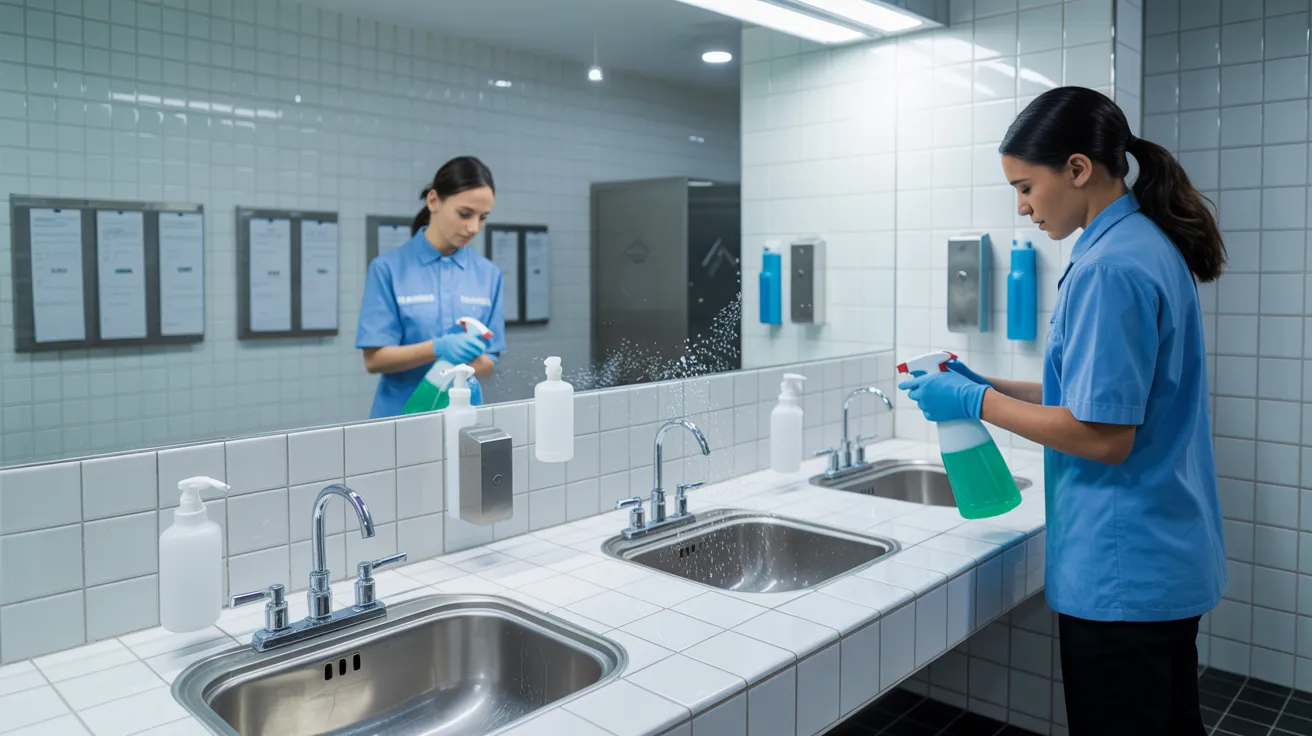
For restroom sanitation, cleaners disinfect touchpoints, fixtures, partitions, dispensers, and waste containers, then replace products and reduce odor. They also service restaurant moprooms, where chemical storage, sink hygiene, and drainage conditions can affect sanitation compliance and staff safety daily.
The Importance of Food Safety Cleaning in Brampton
To adhere to health code requirements and succeed in audits, Brampton establishments must maintain food-safe cleaning standards. You also minimize bacterial spread through proper cleaning of food-preparation surfaces, appliances, and frequently-touched items. Most importantly, you safeguard community wellness by reducing the chance of food poisoning in your establishment.
Regulatory Code Requirements
Because Brampton food establishments operate under stringent health requirements, food safety cleaning directly influences your ability to meet health code requirements, safeguard customers, and sidestep enforcement action. You must maintain clean food preparation areas, written maintenance records, proper chemical use, and documented employee protocols that meet municipal and provincial inspection expectations.
Failure to maintain cleaning standards leads to notices, remedial directives, public perception damage, and operational suspension during further inspections or enforcement reviews.
Cross-Contamination Avoidance
Following regulatory requirements depends on your skill in stopping cross-contamination in routine food work and sanitation. You must separate raw ingredients from ready-to-eat foods, disinfect work areas after use, and store chemicals away from food-contact items. Clear procedures reduce transfer risks and promote steady regulatory adherence.
Building allergen isolation prevents priority allergens from contacting common workstations, storage, or apparatus. Utilize dedicated cutting boards, color-coded tools, and strict utensil labeling so team members won't blend products in cooking or serving.Mandate hand cleaning following raw meat, seafood, eggs, or allergen-containing products. Swap wiping cloths regularly, and confirm sanitizer strength with test strips. When your team follows these practices each shift, you create a cleaner, safer operation that exceeds Brampton's safety standards daily.
Public Health Protection
If food safety cleaning deteriorates, you don't merely face potential inspection issues—you boost the probability of pathogenic contamination affecting customers, staff, and the broader Brampton area. You also weaken your role in safeguarding community wellness, especially in high-traffic food premises where pathogens travel quickly through surfaces, equipment, and touchpoints.
You need cleaning protocols that eliminate contaminants, sanitize correctly, and verify results. That means following exposure periods, employing authorized sanitizers, documenting schedules, and educating employees to meet health-unit expectations. These controls support pathogen reduction by lowering microbial loads before they contaminate surfaces or food. In Brampton, strong sanitation protects vulnerable populations, prevents disease spread, and helps you demonstrate proper care. When you clean to standard, you don't just meet regulations—you actively reduce risk and promote secure food handling throughout the region.
In What Ways Does Cleaning Help Achieve Food Safety Compliance?
Thorough cleaning protocols strengthen food safety compliance by lowering contamination exposure, controlling pathogen growth, and ensuring your facility complies with sanitation requirements under HACCP-based programs and public health regulations. You ensure that food-handling surfaces appear visibly clean and microbiologically controlled, supporting documented preventive controls and inspection readiness.
Comprehensive cleaning moreover reinforces allergen prevention by extracting residues that can provoke undeclared allergen exposure. When you combine established sanitation practices with standards training, your staff can execute established protocols, handle approved chemicals properly, update records properly, and handle discrepancies before issues intensify. Regular cleaning facilitates audit trails, confirms corrective actions, and exhibits commitment throughout audits. Furthermore, it aids you maintain quality assurance, sustain operational adherence, and reduce the likelihood of regulatory actions, recalls, grievances, and unnecessary health dangers.
How Should You Plan Commercial Cleaning Work?
surfaces can accumulate contamination
shutdowns, weather-related soil accumulation, or pest pressure timeframes.
Finding Quality Brampton Cleaning Experts: A Guide
Start by screening providers against food sanitation standards, not cost only. You should verify that each company understands CFIA, public health, and HACCP-aligned additional info expectations relevant to your facility. Ask for insurance documentation, WHMIS compliance, documented staff training, and supervision practices. Review whether technicians understand cross-contamination risks, chemical handling, and traceable sanitation records.
You should further examine operational reliability and answerability. Request references from food facilities in Brampton, then review reply speed, corrective action plans, and communication protocols. Validate the company facilitates supplier audits and can present inspection-ready documentation to regulators or third parties. Confirm equipment is maintained, color-coded implements are applied correctly, and site-specific hazards are identified. A experienced service protects compliance, product integrity, and your brand reputation.
Which elements are part of a hygiene cleaning program?
Develop a written strategy that makes clear every sanitation responsibility, standard, and task prior to production start. You should outline cleaning frequencies, approved chemicals, dilution rates, contact times, tools, and verification methods for each location, surface, and apparatus. Include pre-operational inspections, corrective actions, and employee training requirements.
Your program should also cover cross-contamination controls, waste handling, pest-prevention measures, and documented schedules for bathrooms, drainage systems, surfaces, and food-preparation zones. Detail how you'll separate raw and ready-to-eat processes, support ingredient tracking, and maintain accurate allergen labeling through validated cleaning between product changes. You should designate accountability, keep signed records, and review results against regulatory standards, HACCP controls, and customer requirements. When gaps appear, revise procedures immediately and re-educate staff.
Regular Asked Inquiries
Do cleaning services work during overnight shifts at Brampton facilities?
Yes, you can arrange sanitation coverage to support nighttime operations in Brampton facilities. You'll arrange nighttime cleaning around production windows, security measures, and staffing requirements. Providers typically map nightshift logistics to reduce disruption, ensure adherence, and document completed tasks. You should verify arrival timeframes, supervision, access protocols, and waste handling before service begins.
Can Brampton cleaning experts handle emergency spill response?
Yes, you can locate several Brampton sanitation experts offering spill containment services. They handle contamination, evaluate risks, isolate zones, and perform swift decontamination to minimize risk and limit operational impact. You should confirm timeframes, certifications, safety measures, and procedures. If your facility must meet standards, choose a service that logs events, follows procedures, and supports audits.
Will green disinfectants disinfect safely food-handling equipment?
Yes, natural disinfectants can be safe for surfaces contacting food if you select items marked food-safe and complying with regulations. You should verify exposure duration, mixing proportions, and rinse requirements before application. Many plant-derived products reduce toxic chemical contact, but you still need proof of efficacy against specific pathogens. To maintain residue free surfaces, you should follow manufacturer directions precisely and confirm the disinfectant adheres to food sanitation requirements.
Do cleaning schedules enable production fluctuations?
Certainly, maintenance plans accommodate seasonal shifts readily. Adjust frequencies, staffing, disinfectants, and verification steps to correspond with operational cycles while sustaining compliance standards. Minimize equipment downtime via planning sanitization alongside line changes, peak volumes, and equipment use patterns. Further update written procedures, staff education, and environmental testing to address transient threats, additional allergens, or increased soiling. Periodic assessments preserve your program functional.
Do commercial cleaners educate employees on sanitation best practices?
Absolutely, professional cleaning companies regularly deliver staff training on sanitation best practices. Your staff receives instruction on correct chemical handling, dwell times, contamination avoidance, equipment disassembly, and documentation. They typically align instruction with HACCP, GMP, and CFIA or local public health requirements. Many also perform sanitation audits to verify compliance, pinpoint weaknesses, and reinforce corrective actions. This helps you maintain uniform standards, clear audits, and reduce food safety risks routinely.
Summary
Partnering with Brampton commercial cleaning and food safety professionals means more than cleaning—it ensures your facility stays inspection-compliant and your standards remain compliant. From kitchen areas to production zones, each cleaned area and organized section reduces health hazards and prevents major expenses. By scheduling maintenance at suitable frequencies and executing a comprehensive cleaning strategy, you shield staff, clients, and your image. In a tightly controlled market, sanitary conditions are non-negotiable—they're critical to business success.